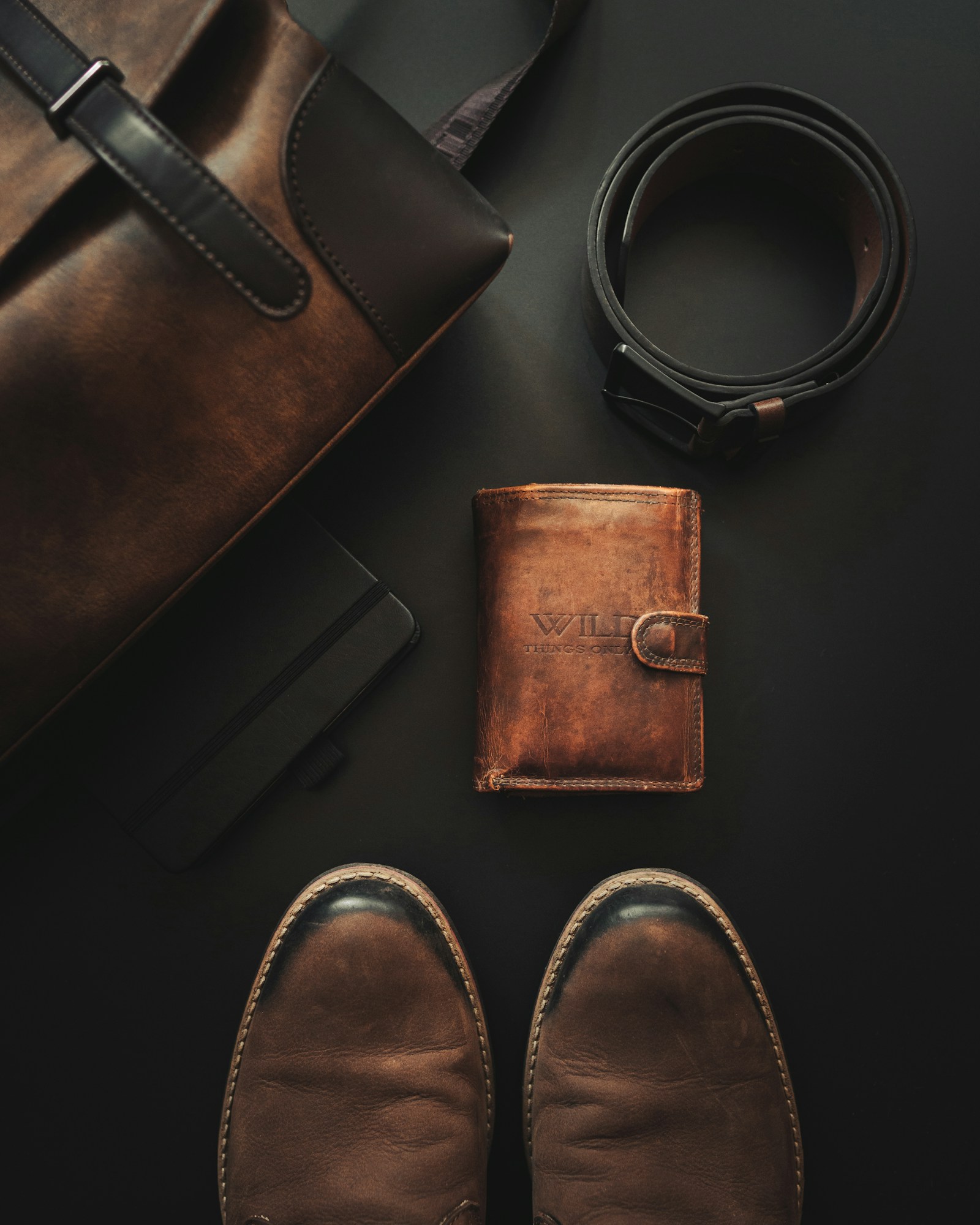
Every guy has a pocket dump. Maybe you've never called it that, but you have one. The knife. The wallet. The keys. The phone. That handful of objects you grab off the nightstand or the kitchen counter before you walk out the door —the stuff that lives in your pockets so consistently that you'd feel naked without it.
There's a whole community built around this idea. They call it EDC —everyday carry —and they take it seriously. Forums, YouTube channels, subreddits with hundreds of thousands of members, all dedicated to the art of curating what goes in your pockets. And most of what you'll find there is solid. Good knives. Good flashlights. Good gear.
But nearly every EDC list you'll ever read is missing the same thing. They cover the practical, the tactical, and the technical. Nobody talks about the sentimental. And that's a miss —because your everyday carry says something about who you are. It should also say something about who matters to you.
What Is Everyday Carry (And Why Do People Care)?
EDC stands for everyday carry —the collection of items you keep on your person or in your bag every single day. Not occasionally. Not for special trips. Every day, by habit, without thinking about it.
The concept has roots in military and first responder culture. When your job depends on having the right tool at the right moment, you stop leaving things to chance. You build a loadout. You test it. You refine it over years until every item earns its place.
That practical origin evolved into something bigger. Today, EDC is its own culture —part utility, part self-expression, part philosophy. The core principle is intentionality. Instead of just grabbing whatever's lying around, you choose your carry deliberately. You pick items that work well, last long, and reflect how you actually live.
It's the difference between having a cheap gas station lighter because it was there and carrying a brass Zippo because you thought about what you wanted in your pocket. Multiply that across every item you carry, and you start to understand why people get passionate about it.
The Essential EDC Checklist
There's no single right answer to what belongs in your everyday carry. It depends on your job, where you live, what you do after work, and a dozen other variables. But most seasoned EDC setups share the same core categories. Here's the rundown.
Wallet
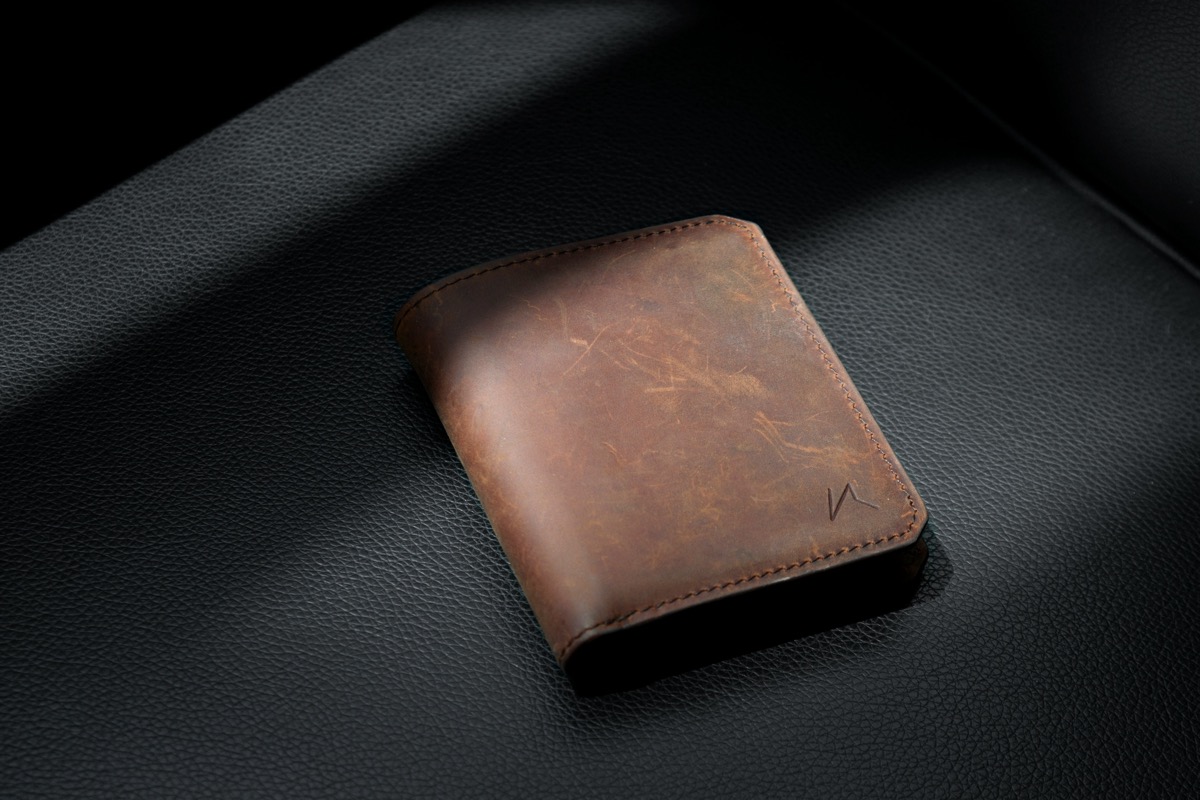
Your wallet is the anchor of your carry. It goes everywhere you go, and it's the one item on this list that everybody already has. The EDC community leans heavily toward slim wallets —Ridge, Secrid, front-pocket bifolds in full-grain leather. The logic is simple: a slimmer wallet is more comfortable, easier on your back (literally —sitting on a fat wallet for years is terrible for your spine), and forces you to only carry what actually matters.
What to look for: RFID blocking if you want it, a capacity of 6-10 cards, cash strap or money clip integrated, and materials that age well instead of falling apart. Leather develops character. Aluminum stays clean. Titanium is for the serious crowd. Pick the one that matches how you use it, not the one that looks best on a desk photo.
And while you're thinking about things to keep in your wallet, consider what's between the cards. That's a slot most guys waste on old receipts. It could carry something better.
Knife or Multi-Tool
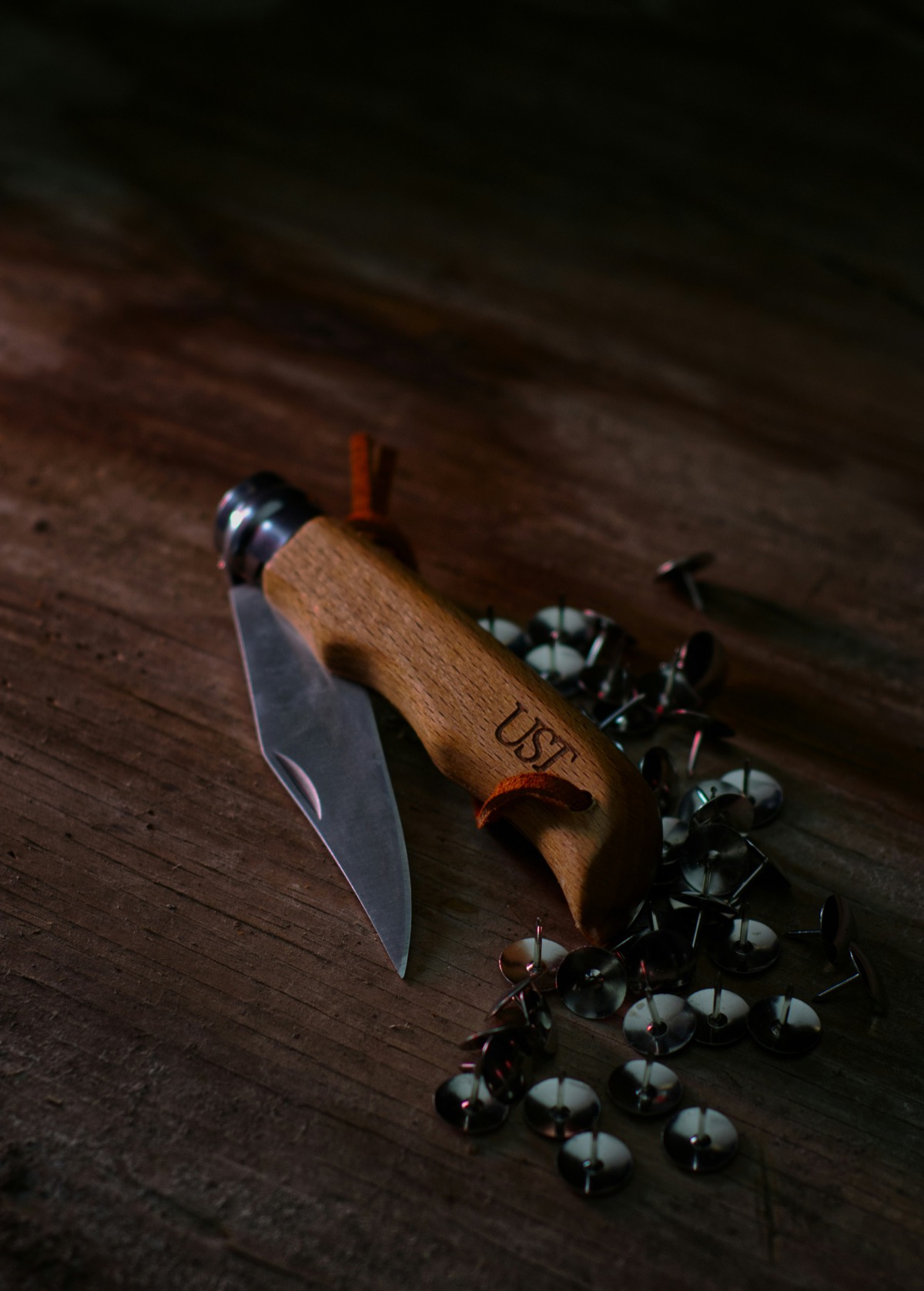
The pocket knife is the single most iconic EDC item. Ask anyone who carries one how often they use it, and the answer is always the same: constantly. Opening packages, cutting loose threads, breaking down cardboard, slicing an apple, handling the hundred small tasks that come up in a week where having a blade on hand saves you from looking for scissors.
If you're just getting started, a Benchmade Bugout or Spyderco Delica gives you a high-quality blade at a reasonable price. If you want versatility over a dedicated blade, a Leatherman Wave or Skeletool covers your knife, pliers, screwdriver, and bottle opener in one package.
One thing worth knowing: knife carry laws vary by state and even by city. Blade length limits, locking mechanism restrictions, and concealed carry rules are all real considerations. Know the rules where you live before you clip a 4-inch folder to your pocket.
Phone and Charger
Your phone is technically the most-used item in your EDC, whether or not the EDC community wants to romanticize it. It's your camera, your map, your communication device, your flashlight backup, and your wallet backup. Everybody has one. The EDC angle is about keeping it alive.
A compact portable battery pack —Anker makes several good ones —weighs almost nothing and guarantees you never hit 0% at the wrong moment. A short braided cable that lives permanently in your bag or jacket pocket. That's it. Nothing fancy. Just the discipline of always having a way to charge up.
Flashlight
This is the one that converts skeptics fastest. "I have a flashlight on my phone" is what everyone says before they start carrying a dedicated light. Your phone flashlight is a single LED pointed in one direction with no throw, no adjustable output, and the side effect of draining your most important device.
A real pocket flashlight —an Olight, Streamlight, or Fenix in the $30-60 range —puts out hundreds of lumens, fits in your pocket next to your knife, and runs for hours on a rechargeable battery. Use it once to actually see what's in a dark parking garage, under your car, or down a trail at dusk, and you'll never leave home without it again.
The best EDC flashlights are the ones small enough that you forget they're there until you need them. Look for anything under 4 inches with a pocket clip and at least two output modes.
Keys and Organizer
Keys are unavoidable. The jingle and the bulk are not. Key organizers —KeySmart, OrbitKey, or even a simple carabiner clip system —turn a jangling mess into a compact, silent package that sits flat in your pocket.
The move here is to minimize. How many keys do you actually use on a daily basis? Most guys carry 3-4 keys they haven't used in months. Strip it down to what you need today. House key, car key, maybe an office key. Everything else goes in a drawer.
Pen
Carrying a pen feels old-fashioned until you need one and don't have it. Signing a receipt, jotting down a phone number, writing a note for someone —these moments still happen even in a digital world, and borrowing a pen from a stranger is a small embarrassment that's entirely avoidable.
The Fisher Space Pen is the classic EDC choice for a reason. It's small, it's bombproof, it writes on wet paper and upside down, and it's been the same reliable design for decades. The Zebra F-701 is a solid budget alternative if you want something stainless and sturdy without the premium price. Either one disappears into a pocket or clips inside a notebook cover.
Watch
You don't need a watch to tell time. You carry a phone. But a watch is the one piece of your EDC that's visible —the only item that communicates something about you before you even speak. That's why the EDC community treats it as more than a time-telling device.
For pure durability, the G-Shock is the benchmark. It's the watch that gets worn in war zones, on construction sites, and on camping trips because nothing kills it. For everyday value, the Casio A168 or F-91W gives you a reliable, clean watch for the price of a fast food meal. For style, an automatic movement —Seiko, Orient, Hamilton —gives you something mechanical and intentional on your wrist.
The point isn't to spend a lot. The point is to wear something deliberate instead of glancing at your phone 80 times a day.
The One Thing Missing from Every EDC List
Go watch ten pocket dump videos. Read twenty EDC forum posts. You'll see the same categories over and over —blade, light, wallet, keys, pen, watch. Tools and tech. Functional gear reviewed on specs and materials.
Nobody ever talks about the sentimental slot.
Every wallet has room for one more thing. A card slot that isn't being used for anything critical. A space between the cash and the IDs where something small and flat could live. And the thing that belongs there isn't another tool. It's a reminder.
A wallet card from your wife. A note from your kid. A message from your dad that you'll carry for the next thirty years. It weighs nothing. It takes up zero functional space. And it's the one item in your entire EDC that can't be replaced by a trip to Amazon.
Your knife says you're prepared. Your flashlight says you're practical. Your watch says you have taste. But a laser-engraved card from someone who loves you? That says something else entirely. It says you carry people with you —not just gear.
This is the part of EDC that the forums miss because it's hard to spec out. There's no lumen count or steel grade to compare. It's just a piece of metal with words on it that make you stop for a second every time you see them. And if you're honest, that moment matters more than anything else in your pockets.
If you're looking for sentimental gifts for men who already have every gadget they need, this is it. It's the gift that fits the lifestyle they already love. And unlike a knife or a flashlight, it's personal enough that it becomes an engraved gift for him that he'll never upgrade or replace.
"I've carried the same knife for 8 years and the same wallet card for 4. If I lost the knife I'd buy another one. If I lost the card, I couldn't."
-- Red Dot customer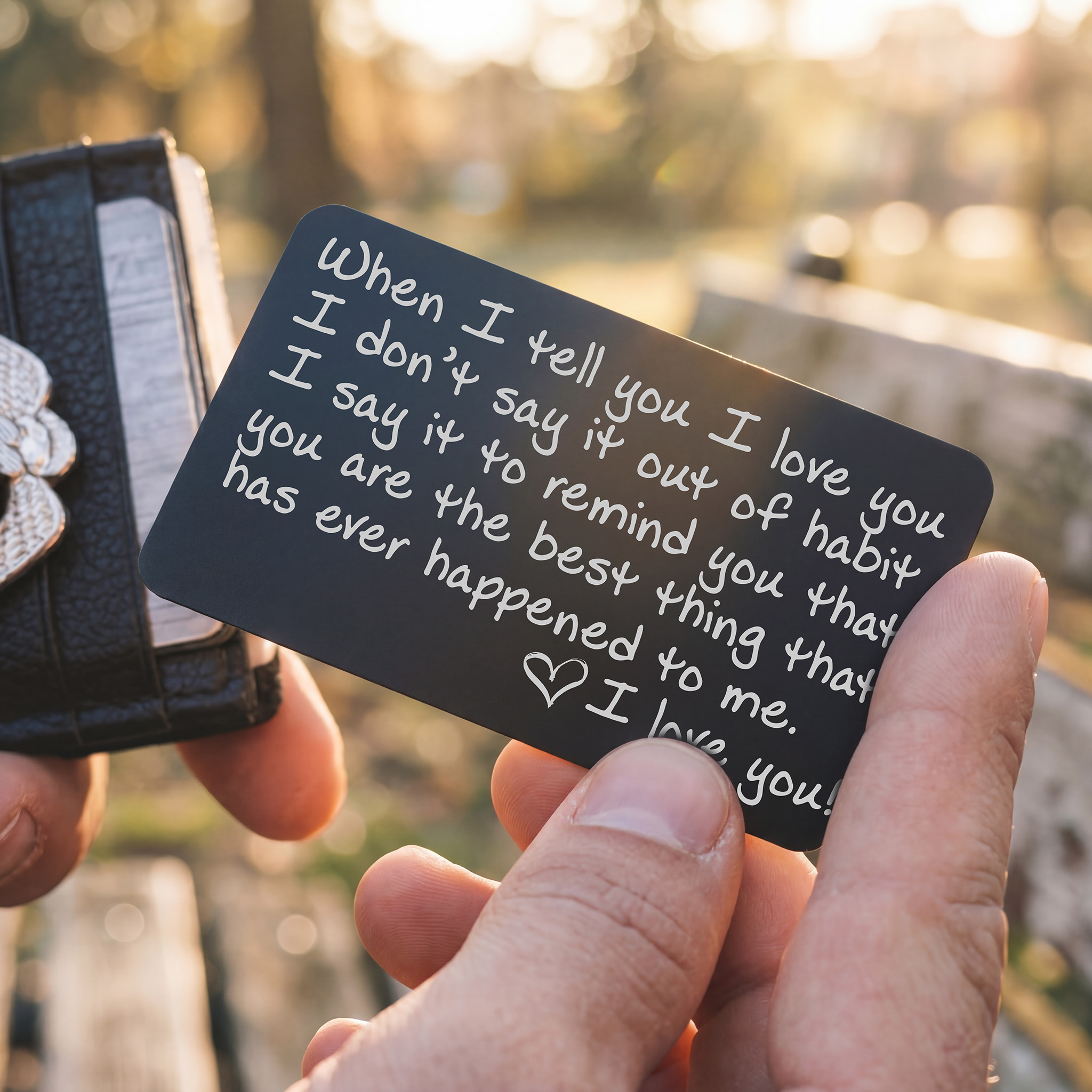
How to Build Your EDC Kit
The biggest mistake new EDC enthusiasts make is buying everything at once. They watch a few videos, get excited, and drop $400 on a complete loadout in a single afternoon. Two weeks later, half of it sits in a drawer because they didn't actually build the habit of carrying it.
Start with what you already carry. Right now, today, what's in your pockets? A phone, a wallet, keys. That's your baseline. You already have an EDC —you just haven't optimized it yet.
Add one piece at a time. A pocket knife first, because it's the most immediately useful addition. Carry it for two weeks. If it earns its place, keep it. Then add a flashlight. Then upgrade your wallet. Then consider a pen. Let each item prove itself before adding the next.
This approach does two things. First, it keeps you from wasting money on gear you won't actually use. Second, it makes every item in your carry intentional —which is the whole point of EDC in the first place. The best everyday carry isn't the most expensive one. It's the one you actually carry. Every day. Without thinking about it.
A good rule of thumb: if you haven't reached for an item in two weeks, it doesn't belong in your daily carry. Move it to your bag, your car, or your desk. Your pockets are prime real estate. Only the essentials get a permanent spot.
EDC for Different Lifestyles
Office EDC
Keep it minimal and clean. A slim wallet, a quality pen, your phone, and your watch. If your workplace allows it, a small slip-joint knife (non-locking) is generally office-appropriate and handles the daily tasks —opening mail, breaking down boxes from the supply room, cutting packing tape. Skip the tactical gear. A Gentleman's knife from Victorinox or a Benchmade Proper fits better in a business environment than a tanto-blade folder.
Outdoor EDC
This is where the loadout expands. A larger fixed-blade or locking folder. A brighter flashlight with more throw. A fire starter or ferro rod. A compact first-aid kit in your pack. Paracord, either as a bracelet or a spool. Outdoor EDC overlaps with bushcraft and hiking gear, but the principle is the same —carry what you'll use, not what looks cool in a flat lay photo.
Travel EDC
TSA changes the game. No blades in your carry-on, which means your knife either goes in checked luggage or stays home. Travel EDC focuses on what survives airport security: a pen, a flashlight (allowed in carry-on), a portable charger, a compact organizer pouch for cables and adapters, and a travel wallet that keeps your passport and cards accessible without fumbling. Some guys carry a Leatherman Style PS specifically because it's the rare multi-tool with no blade —pliers, scissors, file, and tweezers that fly without issue.
Tactical EDC
Military, law enforcement, and first responders build their carry around their job requirements. Stronger blade with a glass breaker. A high-output flashlight with a strobe mode. Tourniquet or IFAK. Handcuff key. These are function-first loadouts where every item exists because someone's safety might depend on having it. The tactical community is where EDC started, and the standards are different —reliability over aesthetics, always. If this is your world, you already know most of this. The one thing worth adding? Something from home. A reminder in your wallet that the person you're protecting out there has someone protecting them at home. That matters on the hard days.
Your Pocket Dump Is a Fingerprint
No two EDC setups are exactly alike. That's what makes it interesting. Your carry reflects your life —your job, your hobbies, your priorities, the climate you live in, the problems you solve on a daily basis. It evolves as you do. The knife you carried at 25 might not be the knife you carry at 40. The wallet that worked when you were single might not work now that you carry photos of your kids.
Build your EDC around function first. Then refine it around quality. And somewhere in the middle, leave room for something that has nothing to do with function at all —something that just reminds you why the rest of it matters.
Because at the end of the day, the most important thing you carry isn't in your pocket. It's the people you carry with you.